Gardening Services in Waterloo

Gardening Services Waterloo provides practical help for keeping outdoor spaces tidy, healthy and well arranged, with work shaped around the needs of homes, rentals and small commercial properties in the area. Our main service covers routine care, one-off visits and larger refreshes, so the result feels managed rather than left to drift through the seasons. If you want a neat lawn edge, better planting structure or a clear plan for overgrown areas, our approach is built around straightforward gardening work carried out with attention to detail.
We can support regular upkeep and more involved outdoor work, including garden maintenance for ongoing care, seasonal tidy-ups and general condition checks. That can mean keeping borders manageable, refreshing beds, dealing with awkward growth and making sure the garden stays presentable without turning into a long list of separate jobs. For customers who want a clearer starting point, we can also help assess what needs attention first and what can wait for a later visit.
When you are ready to move from ideas to action, it helps to request a quotation with the main tasks you want completed. A simple description of the space, the type of work needed and any access points is usually enough to begin. If the plan includes thicker growth or waste that will need sorting, it is sensible to mention that early so the scope can be reviewed properly and the work can be set out in a sensible order.
Routine care for tidy, usable gardens
Regular gardening keeps a space easier to enjoy and simpler to manage. For many properties, the work is less about dramatic change and more about keeping growth under control, maintaining clear edges and making sure the garden does not lose shape between visits. Our routine service can include basic bed care, light weeding, pruning of manageable growth and the sort of general upkeep that supports a tidy appearance without overcomplicating the job.
If the lawn is part of the brief, lawn mowing can be combined with edging and finishing touches so the whole space reads consistently. Lawn work often benefits from being done alongside border trimming and a quick check on surrounding areas, because grass height alone does not determine whether a garden looks cared for. A clean finish around paths, fences and beds usually makes a noticeable difference to the overall result.
What regular visits can cover
In practice, routine work is most useful when it is predictable and proportionate. A well-managed visit might focus on the areas that visibly dominate the space first, then move to the smaller details that improve the finish. Common tasks can include:
- mowing and edging for a clean lawn outline
- basic pruning of light, accessible growth
- weeding of beds, borders and hard edges
- deadheading and removal of tired seasonal material
- general tidying of loose debris and cuttings
Clearance for overgrown or neglected areas

Some gardens need more than maintenance. When growth has become thick, untidy or difficult to manage, a clearance visit can restore a workable starting point. Our garden clearance service is suited to spaces where piles of debris, dense weeds, dropped branches or long-unmanaged borders are getting in the way of normal use. The emphasis is on sensible reduction and removal rather than unnecessary disturbance to healthy parts of the garden.
Clearance work is often most useful when it is planned in stages. First comes the cut-back and removal of obvious overgrowth, then the finer tidying that reveals what can stay and what needs further attention. That process makes it easier to see the structure of the space, whether the next step is planting, lawn recovery or a simpler maintenance routine. Good clearance should create order without stripping the garden of its useful character.
When a customer is preparing for clearance, a brief note about access, outbuildings, paths and any fragile items nearby can help the work run more smoothly. It is also useful to mention whether the priority is appearance, access or reclaiming space for future use. Send a short outline of the job and the main areas you want dealt with, and the quotation can reflect the likely effort more accurately.
Hedges, edges and controlled growth
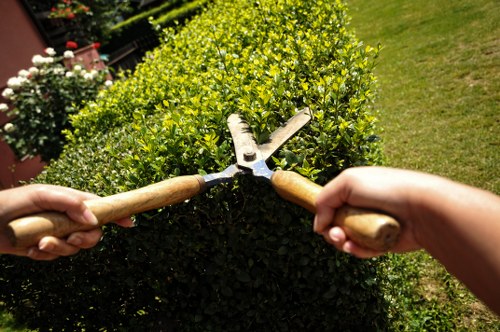
Neat lines make a garden feel managed even when planting is simple. Hedge shaping, boundary trimming and the reduction of uncontrolled growth are important where bushes or screening plants have started to encroach on paths, windows or neighbouring space. Our hedge trimming service is focused on clean shaping, sensible reduction and a finish that suits the plant rather than forcing it into an unnatural outline.
Not every hedge needs the same approach. Some benefit from a light, frequent cut that preserves density, while others need more considered trimming because the growth has become uneven or too tall for a simple tidy-up. The right result depends on the plant type, the season and the current condition of the hedge. In mixed gardens, hedge work often pairs well with border clearing and a lawn finish, because the contrast between soft growth and straight lines becomes much sharper.
We can also advise on cutting back around gates, driveways and side access where vegetation has become awkward to pass. That sort of work is often as much about making the garden usable as it is about appearance. If the space is tight or the hedge has been neglected for a while, it may be better to discuss the likely extent first rather than treat it as a simple quick trim.
Planting, layout and garden changes
Beyond upkeep, many customers want help reshaping a garden so it feels more balanced and easier to live with. Our landscape gardening work can support planting changes, border adjustments and practical layout improvements that give the space a clearer structure. This is the kind of service that suits gardens where the existing arrangement no longer works well, whether because the planting is sparse, the lines are awkward or the current layout is difficult to maintain.
Landscape gardening often succeeds when design and maintenance are considered together. A planting choice that looks attractive but is awkward to care for can become a problem later, while a simpler layout can make the whole garden more resilient. We look at practical factors such as circulation, visibility, growth habit and how different areas connect, so the finished space is easier to understand and work with over time.
Useful decisions before changes are made
Before any reshaping work begins, it helps to decide what the garden should do. Some spaces need stronger screening, others need openness or clearer lines between lawn and beds. A practical plan might consider:
- where planting should add height, colour or structure
- which areas need to stay open for access or movement
- how much ongoing maintenance the chosen layout will need
- whether existing features can be improved rather than replaced
Broader landscaping work and property improvements
Some outdoor projects call for a wider set of tasks than planting alone. Our landscaping service can bring together several forms of garden improvement where the aim is to alter the feel and function of the space more significantly. That may involve reorganising parts of the garden, improving the relationship between hard and soft surfaces or helping a tired outdoor area feel more coherent again. The useful point is not to add changes for their own sake, but to make each part of the garden do its job properly.
Because every garden has different conditions, landscaping is usually best approached from the existing layout outward. We consider what is already working, what creates friction and where a modest change would have the most impact. That might mean changing a planting line, improving the transition between a lawn and a border, or making a neglected area easier to maintain. Careful decisions at this stage often prevent unnecessary rework later.
Where a customer wants more than a tidy-up, it is worth thinking about the balance between appearance and maintenance from the outset. Some improvements are visually immediate but need ongoing care; others are less dramatic yet much easier to live with. A good proposal should reflect that balance clearly, so the result matches both the present layout and the effort the property owner wants to take on afterwards.
Practical work around timber features and boundaries

Outdoor structures often need attention alongside planting and lawn care. Our decking-services page covers work connected with decked areas, which can be useful where timber features sit at the centre of the garden or form part of the route through it. Decking needs a sensible finish, safe access and an appearance that sits comfortably with the rest of the space, especially when the surrounding planting is being refreshed at the same time.
Timber features can change how a garden is used, so they are best considered alongside the wider layout rather than treated in isolation. If the garden has steps, raised edges or a decked sitting area, the surrounding beds and borders often need a matching tidy-up to avoid the structure looking visually separate from the rest of the property. This is particularly important where older growth has started to press against the boundary or shade the area unevenly.
Alongside structural work, some gardens also need selective tree or heavy-growth attention. Where relevant, tree-lopping-and-removal can be discussed as part of a broader plan if overhanging growth, poor light or crowded branches are affecting the garden’s shape. That sort of task needs to be considered carefully and only where it genuinely suits the site, because it can change the character of the garden as well as its practicality.
About Waterloo
Waterloo is an inner district of south London on the north bank of the River Thames, opposite the City and close to the South Bank. It takes its name from the battle of Waterloo, reflecting the early nineteenth-century period when the area developed rapidly as London expanded beyond its historic core. The district is closely associated with Waterloo station, one of the capital’s major rail termini, which first opened in the mid-nineteenth century and has since become a significant transport hub for local, regional and long-distance journeys. The surrounding streets form part of a busy urban landscape shaped by offices, theatres, cultural institutions and riverside movement. Within walking distance are landmarks including the Southbank Centre, the National Theatre and the London Eye, while nearby bridges and embankments connect the district to Westminster, Lambeth and the broader central London network. Waterloo also sits close to the Thames Path, making the river a constant part of the area’s visual identity. Its built environment mixes transport architecture, later commercial development and pockets of older fabric, with public spaces that reflect the district’s role as both a passage point and a destination. The area has strong cultural associations, particularly with performance, architecture and the long history of London’s riverside growth.
Maintenance plans that suit the way you use the garden
Not every garden needs the same schedule, and a sensible plan depends on how the space is used. A front garden may need light but frequent attention to stay presentable, while a back garden might require a more seasonal pattern that focuses on growth spurts and general condition. Our garden maintenance service supports that kind of planning by keeping the focus on the tasks that matter most for the site, rather than trying to apply one routine to every property.
It is often useful to separate the practical priorities into simple groups: visible areas, safety or access concerns, and longer-term improvement. That makes it easier to decide what should happen immediately and what can be added later. For example, a garden may need mowing and hedge work first, while border renewal or more detailed reshaping can wait until the structure is clear. This kind of sequencing helps avoid paying for work that would be undone by a later stage.
For customers comparing options, the quotation stage is usually most effective when it focuses on outcomes as well as tasks. If you want a garden that is easier to care for, say so; if the priority is a tidy appearance for regular use, make that clear as well. pricing and quotes information can help frame the discussion, especially where the job may need more than one type of work or where access and waste removal are likely to influence the scope.
What to include when asking for a quotation

A clear enquiry saves time for everyone. The most helpful details are usually the approximate size of the space, the main jobs you want done, any problem areas and whether the work is one-off or ongoing. If there are path widths, locked gates, parked vehicles or delicate areas close to the work zone, mention those too. That lets the quotation reflect the real conditions rather than an assumed best-case version of the garden.
Where waste is likely to be produced, it is sensible to note whether the priority is simple tidy-up or full removal of cuttings and debris. That distinction matters because a garden can look very different once waste has been collected and loaded. If you are unsure how to describe the job, start with the visible problem areas and the end result you want. We can then shape the scope around the work that is actually needed, rather than guessing from a short label alone.
If you are ready to proceed, request a quotation today and outline the garden work you want completed. For general company details and ways to get in touch, you can also use contact-us when you are ready to take the next step.